

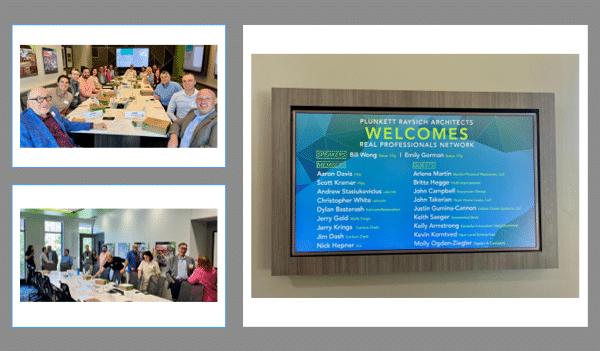
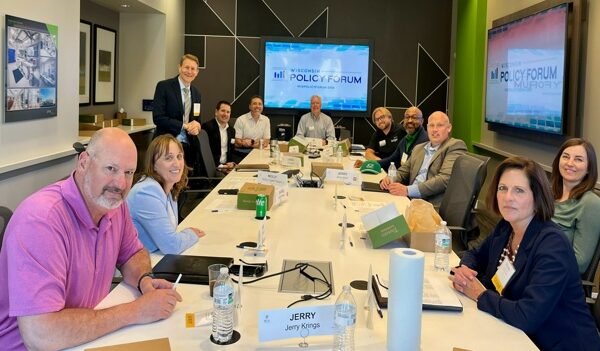
Milwaukee Chapter September Meeting!
Dylan Basterash and Adam Nelson with Kelmann Restoration provided the Milwaukee Chapter with an overview of Kelmann’s property-restoration, remodeling, and environmental-remediation services. They also led a timely roundtable discussion about the operational and financial challenges affecting commercial property restoration.
Founded in 1973, Kelmann Restoration serves Wisconsin from locations in Milwaukee, Madison, and Sheboygan. Its services range from 24/7 emergency response for water, fire, and storm damage to reconstruction, remodeling, and specialized environmental remediation.
The presentation emphasized that successful restoration involves more than repairing physical damage. Property owners and managers must prepare for supply-chain interruptions, labor constraints, rising costs, insurance complications, and the potential loss of business revenue following a disaster.
Key Takeaways
- Kelmann Restoration provides 24/7 emergency response for water, fire, and storm damage throughout Wisconsin.
- The company operates from three Wisconsin locations, with its headquarters in Milwaukee and additional offices in Madison and Sheboygan.
- Kelmann offers an integrated restoration process, helping clients move from emergency response and damage mitigation through reconstruction and final repairs.
- Its construction and remodeling capabilities include kitchens, bathrooms, custom cabinetry, basements, additions, and full-home renovations.
- Through Badger Remediation, the organization also provides asbestos testing and abatement, mold remediation, lead-safe renovation, and specialized demolition.
- Environmental remediation requires strict compliance with state regulations, safety requirements, and established industry practices.
- Commercial restoration costs continue to be affected by material pricing, labor expenses, project complexity, and the availability of qualified contractors.
- Supply-chain volatility can delay materials and equipment, extending restoration timelines and increasing costs.
- Workforce shortages remain a significant challenge, particularly when projects require specialized restoration, construction, or environmental-remediation skills.
- Insurance coverage and claim procedures can materially affect the restoration process. Property owners should understand their coverage, documentation requirements, deductibles, exclusions, and responsibilities before a loss occurs.
- Restoration delays can create consequences far beyond repair expenses, including interrupted operations, displaced employees or tenants, lost revenue, and reputational damage.
- Emergency Response Agreements can help organizations establish expectations, contacts, and response procedures before an emergency occurs.
- Pre-loss planning allows property owners and restoration professionals to identify building priorities, critical systems, access requirements, and decision-makers in advance.
- Strong business-continuity planning can reduce confusion, accelerate the response, and minimize operational downtime following a property loss.
Overall Conclusion
The central message was that preparation is one of the most effective forms of risk management. Commercial property owners and managers should not wait until a fire, flood, storm, or environmental issue occurs to determine how they will respond. Establishing restoration relationships, reviewing insurance coverage, documenting property conditions, and developing an emergency-response plan can significantly reduce disruption, control costs, and help businesses resume operations more quickly.








Recent Comments